A Conversation with Emma Forrester on: The Story Behind the Story
A quiet, deeply human take on the apocalypse, where neighbours, not heroes, shape what survival looks like.

Based in Somerset, Emma Forrester writes character-driven dystopian and speculative fiction grounded in emotional honesty and the quiet rhythms of everyday life.
Her work explores what happens when ordinary people are placed in extraordinary circumstances, where survival depends less on heroics and more on care, humour, and connection. She describes her stories as cosy apocalypse fiction: intimate narratives where community and found family matter just as much as food, shelter, and safety.
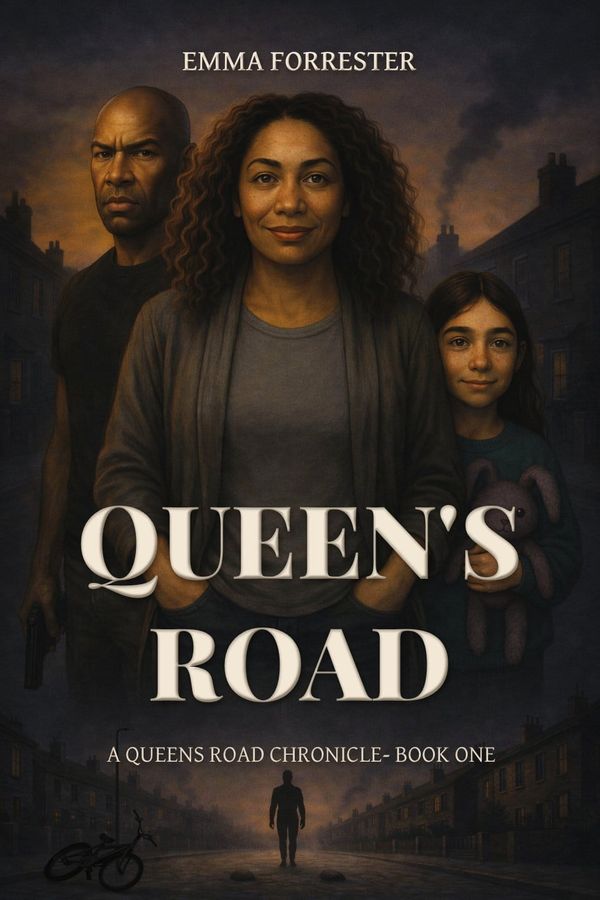
In this interview, Emma shares the story behind Queen’s Road, a novel that gently shifts the focus of dystopian fiction from spectacle to something far more human.
The Conversation
What first sparked the idea for Queen’s Road? Was it a moment, a feeling, or something that stayed with you over time?
For me, it was less a single moment and more a question that had followed me for years. Like many people, I'd watched and read countless post-apocalyptic stories, and I always found myself wondering what would happen on an ordinary British street. Not a group of highly trained survivors. Not people with a carefully stocked bunker. Just neighbours.
I've always had conversations with my family about zombie films and what we'd do in those situations. Those conversations were often funny and practical rather than dramatic. Who would make the tea? Who would panic? Who would organise everyone? Who would forget to charge their phone?
When I started writing Queen's Road, I realised I wasn't really interested in the apocalypse itself. I was interested in what happened afterwards, in the small moments of humanity that survive alongside fear. I wanted to explore what community looks like under pressure, and whether ordinary people could become extraordinary simply by choosing one another again and again.
Is there something about the story that readers might not immediately see, but that matters deeply to you?
I think readers often come to dystopian fiction expecting survival to mean self-sufficiency. The lone hero. The person who can do everything alone.
What mattered deeply to me in Queen's Road was the opposite idea: that survival is relational.
The people on Queen's Road survive because they share what they have. Because they disagree and forgive. Because they hold one another accountable. Because children are still allowed to be children, and someone still remembers to celebrate birthdays and make a cup of tea.
The infected matter, of course. But the real story is about the quiet courage of staying connected to other people when fear encourages you to withdraw.
Did the story change as you were writing it? If so, how?
Absolutely.
I originally imagined a much more traditional dystopian story, one that leaned more heavily into action and spectacle. But every time I tried to push the story in that direction, something felt slightly untrue.
The characters kept drawing me back to the quieter moments.
They wanted breakfast conversations and difficult decisions. They wanted humour and grief to exist side by side. They wanted to argue about practical things while the world was falling apart around them.
I realised that the apocalypse was the setting. The neighbours were the story.
Once I understood that, the entire book found its shape.
Was there a part of the book that felt especially difficult or personal to write?
I think any scene involving loss carried emotional weight for me because I wasn't writing about strangers. By that point, the characters had become people I cared about deeply.
More broadly, I found it challenging to write about hope without slipping into sentimentality. I wanted to acknowledge fear, grief, and exhaustion honestly while still making space for warmth and humour.
That balance felt important because it reflects how I experience real life. Even during difficult times, people still laugh. Someone still puts the kettle on. Someone still checks that everyone got home safely.
Those small acts of care matter.
Looking back now, what does this story represent for you?
I think Queen's Road represents a belief I've held for a long time: that ordinary people are capable of remarkable things.
Not because they become fearless, but because they continue despite being afraid.
The story reminds me that community isn't built through grand gestures. It's built through consistency. Through showing up. Through choosing to stay in relationship with one another, even when it's difficult.
At its heart, Queen's Road isn't really a story about the end of the world.
It's a story about what remains when everything familiar falls away.
And for me, the answer has always been people.
Closing Note
There’s something quietly radical in Emma Forrester’s work. In a genre often defined by collapse and chaos, she chooses to write about connection. About neighbours. About the small, steady acts that hold people together when everything else falls apart.
Queen’s Road reminds us that survival isn’t always about strength or strategy. Sometimes, it’s about staying. About sharing. About making tea, even at the end of the world.
Stay Connected
If you enjoy discovering thoughtful, character-driven fiction and the stories behind the stories, follow Hidden Voices for more author interviews, quiet reflections, and honest writing journeys.