Featured Author: Sherry V. Ostroff
Sherry V. Ostroff's Remember Me Not brings medieval England to life through one woman's fight for survival, exploring identity, faith, persecution and the difficult choices faced by those who remained.

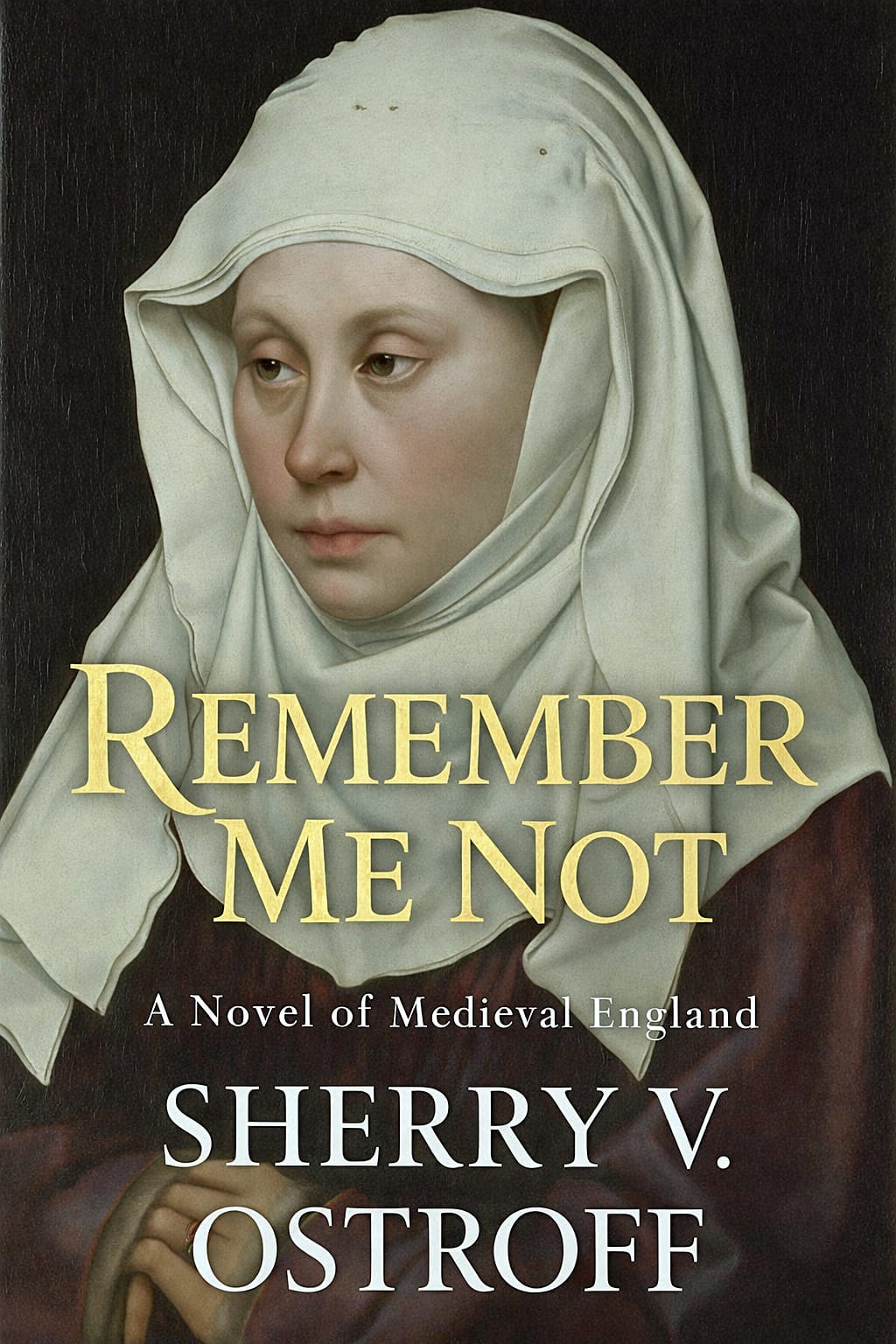
Remember Me Not: A Novel of Medieval England - When history leaves questions behind
💡 Quick Look
• Author: Sherry V. Ostroff
• Book: Remember Me Not: A Novel of Medieval England
• Genre: Historical Fiction
• One-sentence summary: When Gracia Sabot accompanies her physician brother to England to treat the dying King Henry IV, she is left alone, vulnerable, and accused of regicide after his death, forced to survive in a land where being Jewish is forbidden and identity itself becomes a matter of life or death.
• Themes: Identity, faith, persecution, survival, and the difficult choices faced by those who remained after the 1290 expulsion of Jews from England
Historical fiction often begins with a question.
For Sherry V. Ostroff, that question emerged while she was researching another novel. A detail she encountered about medieval London led her down a research rabbit hole, and eventually toward a story she had never intended to write.
That discovery became Remember Me Not: A Novel of Medieval England, a historical novel about identity, survival, faith, and the dangerous choices faced by Jews living in medieval England.
It is also a good example of how historical research can unexpectedly become the seed of an entirely new book.
When Research Opens Another Door
Sherry has learned to follow those rabbit holes.
Writing historical novels demands extensive research, but for her, the research is more than a way to make an existing story convincing. Sometimes it introduces her to a piece of history that is unfamiliar, surprising, and too compelling to leave behind.
That is exactly what happened while she was researching Expulsion, her fourth novel, set in late medieval Spain in 1492.
During that research, Sherry discovered the Domus Conversorum, or House for Converts, in London.
Established in 1232 by King Henry III, the institution provided accommodation and financial support for Jews who converted to Catholicism. Those who converted were required to surrender their possessions, leaving many of them without the resources to begin their new lives.
The discovery raised a series of questions for Sherry.
What happened to English Jews after Edward I expelled them from England in 1290?
Did some attempt to remain by concealing their identities?
And what happened to the Jews already living at the Domus Conversorum? Did their numbers increase following the expulsion? Were those converts accepted by the Christian community?
Perhaps the most important question was also the most unsettling:
How dangerous was it to live as a Jew in medieval England?
The answers Sherry uncovered eventually became the foundation for Remember Me Not.
A Career Built Around the Past
Sherry V. Ostroff is an award-winning author whose work includes one memoir, The Lucky One, and five historical novels: Caledonia, Mannahatta, Expulsion, The Wall at the Sugar Factory, and Remember Me Not.
Her academic background naturally complements the demands of historical fiction. She earned a bachelor's degree from Temple University and a master's degree in history from Millersville University.
Yet research alone does not make a historical novel.
Facts provide the framework. Fiction allows a writer to imagine the people who had to live inside those facts.
That is where Sherry's work begins to explore the human consequences of history.
About Remember Me Not
At the centre of the novel is Gracia Sabot, a Jewish woman who leaves Milan with her brother Elias, a physician summoned to England to treat the dying King Henry IV.
For Gracia, the journey is dangerous from the beginning.
She is forbidden from entering England because she is Jewish, and her brother's royal medical mission provides the temporary protection that allows her passage.
Then Elias dies.
Suddenly alone and vulnerable, Gracia is accused of regicide. With no one left to protect her, survival depends on her intelligence and on a decision she never could have anticipated making.
Sherry describes the novel:
Gracia Sabot persuades her brother, Elias, a physician, to take her with him on a perilous voyage from their home in Milan to England, where he has been summoned to treat the dying King Henry IV. But Gracia’s passage is fraught with danger from the start. As a Jew, she is forbidden entry into England—only her brother’s mission grants her temporary safety.
When Elias dies, Gracia is left vulnerable, alone, and accused of regicide. With no one left who can protect her, Gracia must use her wits to survive, and, in a moment of desperation, she makes a most unlikely choice.
Remember Me Not is a historical novel set in medieval England. In 1070, French Jews arrived at the invitation of William the Conqueror. But two centuries later, the protective status he offered was stripped away, and Jews became targets with few choices: expulsion or conversion. Remember Me Not explores what happened to those Jews who chose to remain in England.
History Through One Woman's Eyes
Large historical events can sometimes become distant when viewed only through dates and political decisions.
A novel can bring them much closer.
Through Gracia, the consequences of changing laws and religious persecution become personal. The larger history of medieval England is experienced through one woman's vulnerability, uncertainty and determination to survive.
Her circumstances also make identity impossible to treat as an abstract idea.
Gracia cannot simply decide when being Jewish matters and when it does not. Her identity determines where she can go, what protection she receives, and how others perceive her.
And when that identity becomes dangerous, the question of survival becomes inseparable from the question of who she is willing, or able, to become.
An Excerpt from Remember Me Not
The novel opens in an atmosphere of confinement and uncertainty.
Gracia wakes to voices outside her room, trying to orient herself within an unfamiliar place. The physical details of her surroundings (the stone walls, cold floor, thin clothing, straw mattress and covered window) create a world where even the smallest comforts have disappeared.
But the most powerful element of the passage is the sense of isolation.
Gracia remembers a dream in which someone is pursuing her and calling her name. In the waking world, she realises that the people who once might have protected her are gone.
And then the voices come closer.
“I hear voices.
Garbled words outside my room splinter the silence of the night.”
The excerpt gradually moves from stillness into tension as Gracia leaves her bed and approaches the curtained window, unaware of what awaits beyond it.
The scene captures the claustrophobic uncertainty at the heart of her story: she has already lost the life she knew, and the world outside offers no obvious refuge.
The Questions Behind the Fiction
What makes Remember Me Not particularly interesting is that its central premise grew from questions rather than answers.
Sherry encountered a historical institution and began wondering about the people connected to it.
Who were they?
What happened to them?
How did they live with the choices forced upon them?
And what did survival look like when every available choice carried consequences?
Historical fiction gives Sherry room to explore those questions through character and story.
Rather than simply recreating the past, she asks readers to imagine what it might have felt like to live inside it.
A Writer Who Keeps Following the Rabbit Hole
With five historical novels behind her, Sherry has developed a writing life in which one book can unexpectedly lead to the next.
The research for Expulsion opened the door to Remember Me Not.
That kind of discovery seems fitting for a writer whose work is rooted so deeply in history. The past is full of stories that have been documented, forgotten, overlooked, or simply waiting for someone to ask a different question.
Sometimes the most interesting story is the one a writer finds while looking for something else.
Beyond the Books
Sherry lives in Lancaster County, Pennsylvania, with her high school sweetheart.
She devotes her time to writing, reading and travelling, pursuits that naturally feed a writer whose imagination frequently travels centuries into the past.
She is also available to meet with book clubs and offers five different fee-free PowerPoint programs about writing and her books. Readers and book groups interested in learning more can contact her directly for a brochure.
A Final Thought
The title Remember Me Not carries a particularly poignant tension.
To be remembered is to remain connected to a story.
To be forgotten can mean disappearing from the historical record altogether.
Sherry Ostroff's work brings fictional lives into the spaces between the dates and events we know from history. With Remember Me Not, she takes a period marked by expulsion, conversion and uncertainty and asks us to consider the people who remained caught inside those decisions.
Gracia's story begins with a journey to England.
It becomes a fight for survival.
And behind her story sits the question that first drew Sherry into this particular historical rabbit hole: what happened to the people who refused, or were unable, to simply disappear?
Sometimes a novelist's job is to make sure we remember to ask.
Where to Find Sherry V. Ostroff
Website: sherryvostroff.com
Book: Remember Me Not: A Novel of Medieval England — available through Amazon https://www.amazon.com/dp/B0H3WVKD3X
For book club meetings and information about Sherry's PowerPoint programs, readers can contact the author directly.
Originally published on Hidden Voices
Featured Author spotlight by Roberta Maretti
Book: Remember Me Not by Sherry V. Ostroff
Genre: Historical Fiction