How to Balance Art and Audience Without Losing Your Voice
Teaching students with disabilities has shown me the power of listening. From helping a Deaf child’s parent learn ASL to guiding students with Autism, I’ve learned that truly hearing someone can transform lives and inspire courage in unexpected ways.

I currently teach American Sign Language at the college level. During my first semester, a student asked me why I had switched from teaching Psychology to teaching ASL. Answering that question was unexpectedly meaningful. My hearing loss had become more challenging, and explaining my choice helped me reflect on how deeply connected my work is to who I am.
When I teach, I feel purposeful. Listening to students is invaluable, and not just in the literal sense. Many of them are carrying multiple challenges at the same time. Over the years, I’ve supported students not only academically, but personally.
One student in particular stays with me. She was an older student, married, with five children, one of them Deaf. I was honored to teach her ASL so she could communicate with her son. She went on to teach her spouse and her other children as well. At the same time, she was navigating a difficult domestic situation. I supported her through that period, and it empowered her to keep going. A year later, I saw her again. She had found a job, secured an apartment for her family, and obtained a car. I was incredibly proud of her.
Throughout my career, I’ve worked with many students with disabilities. I also reflect on my own (hearing loss and other challenges) as part of how I connect. One semester, I taught a class that included students with autism, one Deaf student, and others with different needs. Helping them find their voice was deeply rewarding. Two students with autism stood out, brilliant individuals who struggled with self-esteem. I helped them believe in themselves. Both ended up on the honor roll and were inducted into Phi Theta Kappa.
After more than twenty years of teaching students with and without disabilities, I could share countless stories. My greatest reward comes from listening, truly listening, to students’ goals and guiding them where I can. Too often, people don’t ask why. Why did someone fail? Why are they crying in class?
I once had a homeless student who was struggling with housing, school, and a painful relationship. Everything felt overwhelming for him. With support and encouragement, he gained the self-confidence to stay in school and re-integrate into the classroom.
Listening matters. Sometimes, you may be the only person who does.
Take a few minutes to find out why someone is upset. Don’t push. When people are ready, they will share.
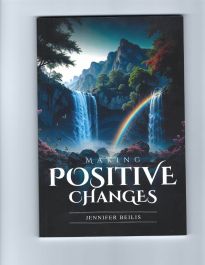
My students encouraged me to complete my second book, Making Positive Changes. I’m proud that it’s now available as an audiobook, making it accessible to people who are blind, have low vision, or benefit from listening while reading. Accessibility matters.
My thesis at NYU, which still holds true, is simple:
People with disabilities can attend school, work, and live independently with the proper accommodations.
It’s also essential to respect individual choice. Some people want accommodations; others don’t. Everyone struggles differently. My book is journalistic in nature and supports mental health, self-help, education, and disability advocacy.
My students have seen me struggle in the classroom: trying to hear, asking for repetition, adapting in real time. Many have attended my author talks on motivation and disability awareness, where I share more of my story. They walk away seeing a teacher with multiple disabilities who continues to show up, a real role model.
And I’ve learned just as much from them.
People are craving the human act of listening and caring.
That, to me, is how you balance art, audience, and authenticity, without ever losing your voice.
Making Positive Changes | Audiobook on Spotify