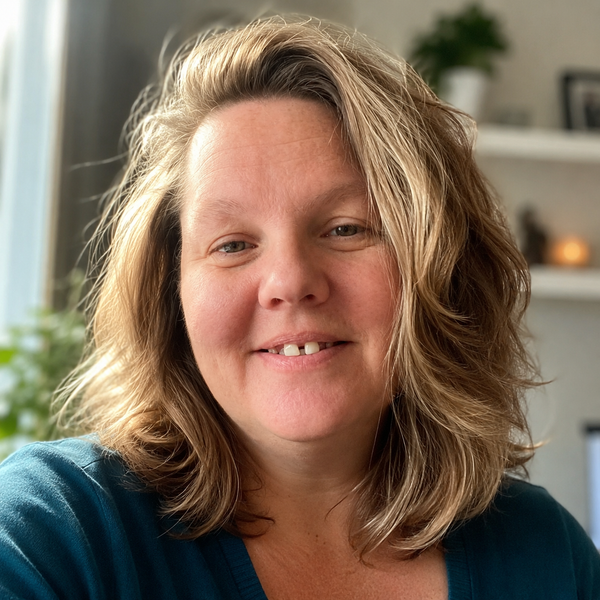
A Conversation with Sue Robertson Danells on: The Relationship with Readers
What does it mean to be chosen by a reader? Sue Robertson Danells reflects on quiet impact, unexpected connections, and why being read matters more than being widely known.

💡 Quick Look
• Author interviewed: Sue Robertson Danells
• Books: The Long Game, The Bookbinder (and the DI Maggie Dent trilogy)
• Focus: What it means to be chosen by a reader — quiet impact, unexpected connections, and why being truly read matters more than being widely known
• Key insight: A stranger reaching out feels like winning the jackpot. Impact on individual readers outweighs sales numbers. Readers often reveal layers the author never intended.
There is a particular kind of joy that doesn’t come from numbers, but from being chosen.
In a world where thousands of books are published every day, being read, truly read, by someone you’ve never met can feel almost improbable.
Sue Robertson Danells, author of psychological fiction including The Long Game and The Bookbinder, writes with a deep sensitivity to the human condition. In this conversation, she reflects on what it means to reach readers, the unexpected connections that form through stories, and the quiet impact of being understood.
The Conversation
What does it feel like to know that someone is reading your work?
Like most authors, I know that some friends and family will always read my work, and I'm grateful for their support. However, when a stranger reaches out because they have picked up one of my books, it’s a little like winning the jackpot. There are so many thousands of books by the same number of authors, all vying for a reader's attention, that for one of mine to be chosen fills me with immense happiness.
The hard work, the sleepless nights, were not for nothing. I may not sell many copies, but I'd rather be known for the impact I've had on my readers, than as a best seller.
Have you ever received a message or reaction from a reader that stayed with you?
I have. A fellow indie author read the first of my DI Maggie Dent trilogy, The Long Game, in which Maggie experiences personal loss and tragedy. This author not only wrote an amazing review for the work, but during subsequent messaging, revealed that she experienced the same tragedy, and that my writing cut deep into her heart.
I'll never forget that this work of fiction brought us together as friends.
Do you think about your readers while writing, or only after?
Sadly, readers are far from my thoughts as I write and perhaps that's why I don't sell many! My head is full of the story that's presenting itself, and I follow its lead.
To be honest, I write primarily for myself, because that is the joy of creating something as personal as a novel, and delving into all the special experiences I've had, to use them for fictional purposes. It's only after a book is published that I begin to consider whether it will hit the mark with readers.
Has being read changed the way you see your own work?
Not per se. However, I'm fascinated by the interpretation different readers have of the same work. It's a well-known fact that art is subjective, but when readers write reviews which clearly demonstrate this, it can sometimes make me look again.
For example, a recent review of my latest work, The Bookbinder, described it as a tense, slow-burning psychological drama about the collapse of a small community under fear and suspicion.
The strange aspect of this is that I never once considered the novel to be about the collapse of a small town.
What do you hope readers take with them after finishing your book?
I'd like to think that readers will always find a connection to something in my work, whether this is about place, experience, or any other aspect of life.
My writing seems naturally to focus on the human condition, perhaps because this fascinates me, so relating to something I've written—taking thoughts about it away once the book is finished—will always help me to know that I've done the best I can.
A Closing Note
There is something quietly moving in the way Sue speaks about her readers: not as an audience, but as individuals.
Not as numbers, but as moments of connection.
If something in this conversation resonated with you, you’re warmly invited to leave a comment below. Sometimes the smallest reflections are the ones that stay the longest.
Stay Connected
If you’d like to read more conversations like this, consider becoming a member of Hidden Voices.
Or, if this piece stayed with you, share it with someone who might recognize themselves in it.
Stories travel differently when they are passed from one reader to another.
Originally published on Hidden Voices
Author Conversation by Roberta Maretti
Featured author: Sue Robertson Danells
Theme: The relationship between writers and readers