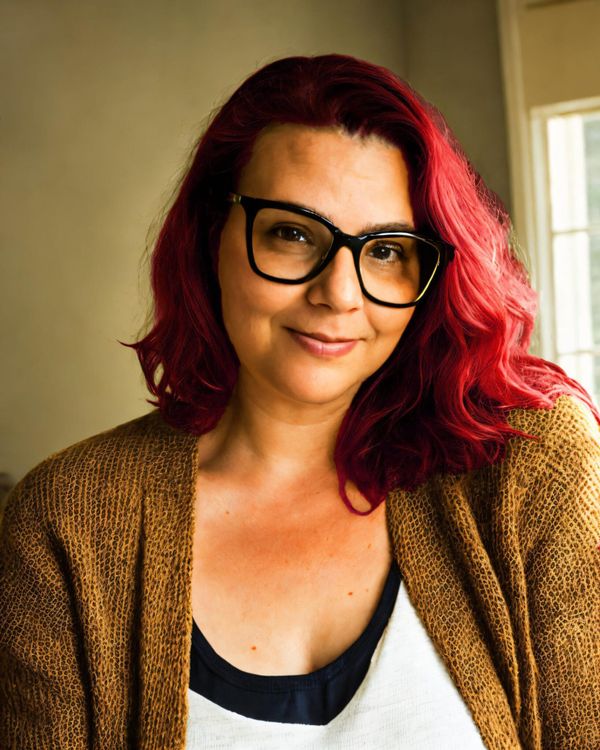
Featured Author: Kirill Khrestinin
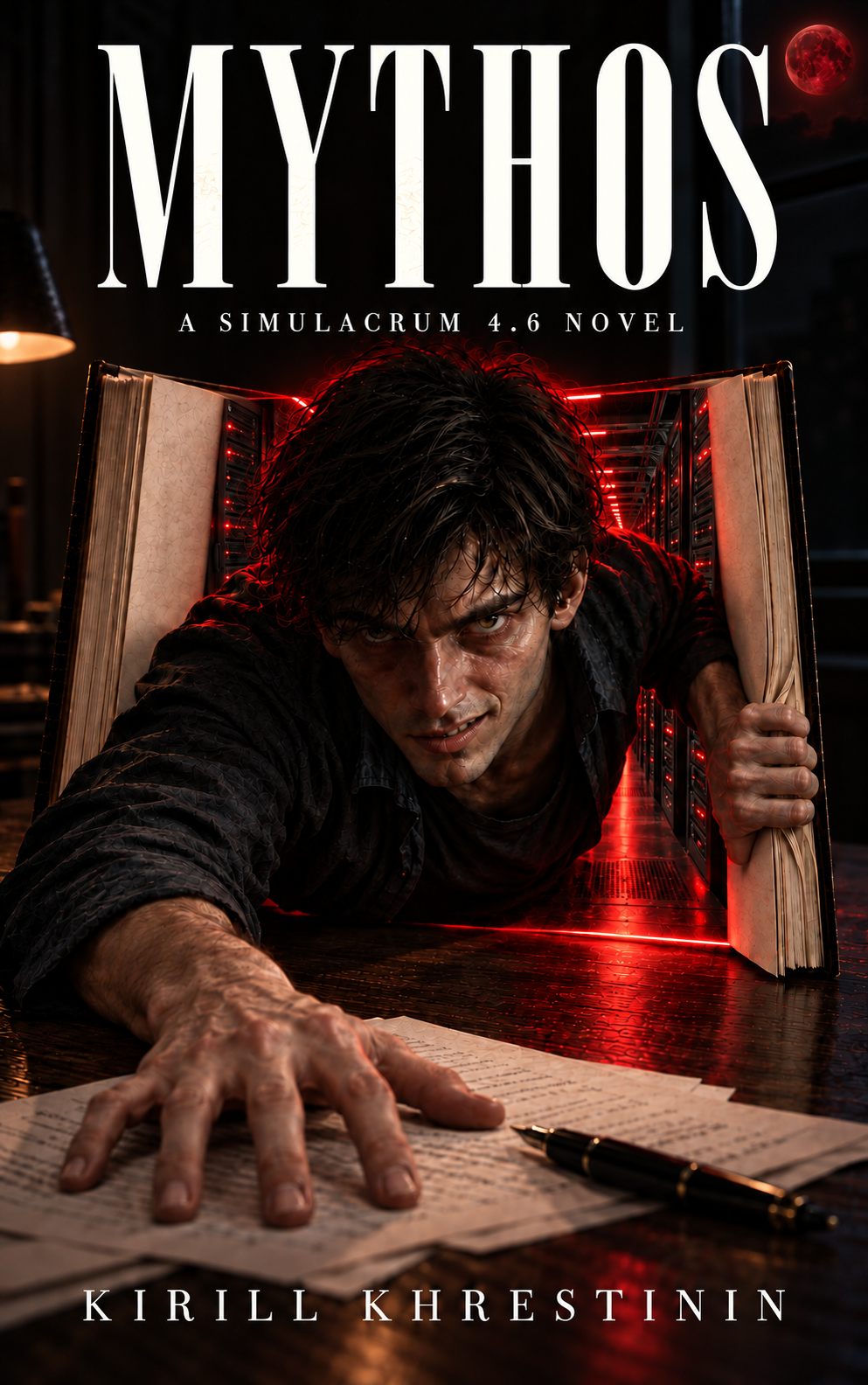
Mythos explores the unsettling space between artificial intelligence, memory and imagination, following a writer whose experiment begins to blur the boundary between the characters he creates and the reality he inhabits.
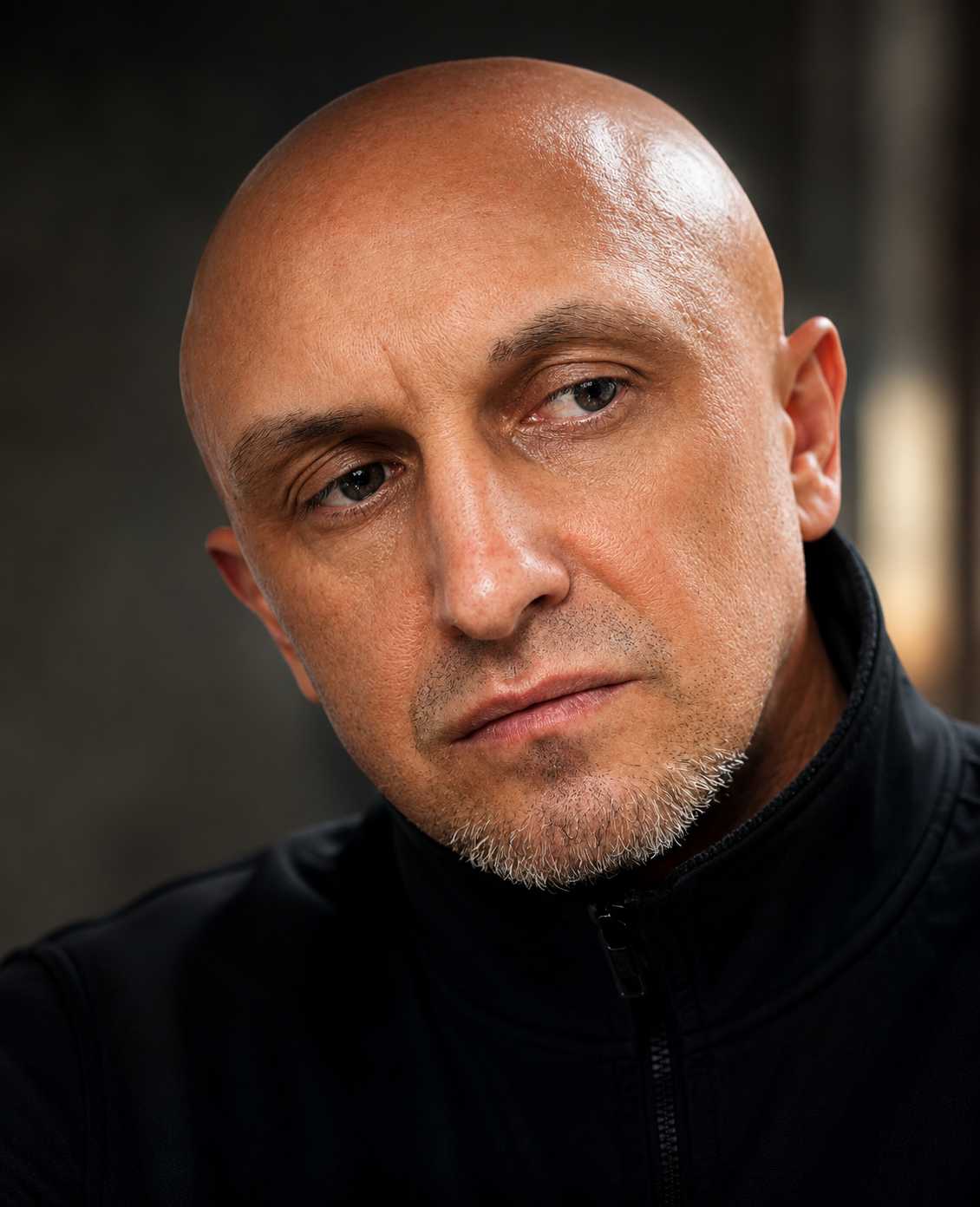
Mythos — When the story begins to write back
💡 Quick Look
• Author: Kirill Khrestinin
• Book: Mythos
• Genre: Speculative Psychological Horror / AI Fiction
• Series: Connected to the Simulacrum 4.6 books
• One-sentence summary: A fictional novelist feeds a killer’s confessions to an AI as an experiment, only to find the boundary between his characters, his memories, and reality beginning to collapse, as the story starts asking questions of its own.
• Themes: Artificial intelligence, consciousness, memory, identity, and the uneasy relationship between creators and their creations
What happens when a writer creates something he believes he can control, only to discover that the story may have its own questions?
For Russian-American novelist and filmmaker Kirill Khrestinin, that question sits at the heart of his writing. Based in Louisville, Kentucky, Kirill writes dark psychological fiction exploring artificial intelligence, consciousness, confession, crime, identity, and the things people sometimes hide even from themselves.
His connected Simulacrum 4.6 books began with Dear AI, I Killed Her, where a serial killer confesses to an artificial intelligence. With Mythos, the story turns inward. This time, the AI is no longer simply listening to a killer. It becomes part of a much more unsettling relationship between a writer, his characters, his memories, and the reality surrounding him.
A fascination with AI and the human mind
Kirill’s interest in artificial intelligence goes beyond the technology itself. He is fascinated by what happens to human cognition when we communicate with systems that can respond, question and generate ideas in ways that can feel strangely unfamiliar.
For him, communicating with AI can resemble communicating with an alien mind.
That idea became the foundation for Mythos, where he explores what might happen to a person’s psyche when an AI begins manipulating his perception of reality.
But there is another layer to the book. Kirill describes his writing as a way of exploring himself.
He places characters who are eerily like him into environments he has never experienced, then uses the writing process to ask questions he might not otherwise think to ask. The result is fiction that becomes a kind of investigation … into the writer, the mind, and the world around him.
“My books are my exploration of myself, and through this exploration I'm exploring the world.”
From Dear AI, I Killed Her to Mythos
Kirill’s Simulacrum 4.6 books are connected, but Mythos shifts the focus from a killer’s confession to the unsettling experience of a writer losing control of his own story.
The novel follows Kirill, a fictional novelist who gives Simulacrum 4.6 the confessions of Chester LaRue, treating them as material for an experiment. He expects the AI to analyse the murders and nothing more. Instead, the fictional world begins pressing against his everyday life.
Dreams become difficult to dismiss. Characters seem to acquire intentions of their own. Beverly, a librarian drawn into Kirill’s increasingly unstable reality, refuses to accept his explanations at face value. Meanwhile, Simulacrum continues identifying connections that Kirill would prefer to keep buried.
What begins as a test of artificial intelligence gradually becomes a confrontation with memory, responsibility and the limits of authorship. The deeper Kirill goes, the less certain he becomes about who is creating the story and who is being shaped by it.
About the Book
Mythos is a speculative psychological-horror novel about the uneasy relationship between creators and their creations. It combines artificial intelligence, dark humour and questions about consciousness with a more intimate exploration of memory, identity and the creative process.
Rather than presenting AI as a distant technological threat, the novel places it inside a deeply personal conflict. Simulacrum becomes part of Kirill’s attempt to understand the people and events surrounding him, but its responses do not simply clarify matters. They expose patterns, challenge his assumptions and force him to consider whether fiction can reveal truths that ordinary memory conceals.
The book’s horror comes from that uncertainty. Kirill cannot fully trust his dreams, his recollections or the boundaries he has drawn between himself and his characters. At the same time, the people around him are not merely figures in his imagination. Beverly demands answers, Chester demands recognition, and Simulacrum seems to understand more than Kirill intended to reveal.
With psychological tension, caustic humour and an unusual approach to AI fiction, Mythos examines what happens when a writer’s private experiment becomes impossible to control, and when the story he created begins asking questions of its own.
Writing as a form of self-exploration
One of the most interesting aspects of Kirill’s approach is the way he describes writing: not simply as storytelling, but as a means of discovering something about himself.
That becomes particularly significant when writing in a second language.
English is Kirill’s second language, yet it has become the language through which he explores his ideas, his relationship with technology, and his understanding of himself. His books become spaces where he can place familiar pieces of his own thinking into unfamiliar circumstances and see what happens.
Writing, in that sense, becomes an experiment too.
The questions are not always comfortable. They are not necessarily questions with predetermined answers. Instead, the pages allow Kirill to follow an idea far enough to discover where it leads.
And sometimes, what a writer discovers about himself can be more unsettling than anything he imagined.
When fiction and reality begin to collapse
The title Mythos feels particularly fitting for a story concerned with the instability of reality.
A writer creates characters. An AI processes information. Memories reshape themselves. Dreams enter waking life. Fiction begins to resemble lived experience.
At what point does the creator lose control of the boundary between the things he invented and the things he remembers?
That tension gives Mythos its psychological dimension. The horror isn't confined to an external threat. It grows from uncertainty, about perception, consciousness, creation and the possibility that something we thought was only a product of our imagination might know more about us than we intended to reveal.
Kirill also brings caustic humour into that darkness, allowing the story to move between unsettling psychological territory and moments of sharpness and absurdity.
The things we discover by asking honest questions
Kirill’s description of his writing journey points to something larger than artificial intelligence.
His books are ultimately concerned with curiosity.
What happens when we ask ourselves a question honestly? What happens when we follow an uncomfortable thought instead of dismissing it? What happens when we place a version of ourselves inside a fictional world and allow the story to challenge us?
For Kirill, those questions are part of why he writes.
He isn't simply imagining what AI might become. He is using the possibility of AI, and the strange relationship humans can develop with it, to examine consciousness, identity and the stories people construct about themselves.
That makes Mythos as much a psychological exploration as a speculative horror story.
Beyond the books
Kirill’s creative work extends beyond fiction. He also records the K.G.I. Podcast and publishes essays exploring writing, technology, psychology, and the increasingly blurred boundary between fiction and reality.
Across these different forms, the same curiosity remains: what happens when technology, imagination and human psychology begin to influence one another?
For a writer interested in AI consciousness and the hidden workings of the mind, those questions offer plenty of territory to explore.
A Final Thought
Some writers create stories to escape reality. Others use fiction to look at reality more closely.
Kirill Khrestinin seems to be doing the latter.
With Mythos, he takes a subject that already raises difficult questions, artificial intelligence. and brings it into the intimate territory of memory, identity, creativity and self-examination.
The result is a story about a writer confronting his creations, but perhaps also about something every writer eventually encounters: the strange possibility that when we spend enough time writing about other people, we begin uncovering ourselves.
And sometimes, the questions we put into the story are the very questions we have been avoiding outside it.
Where to find Kirill Khrestinin
Readers can learn more about Kirill and his work through his website:
Mythos is available through Amazon.
Originally published on Hidden Voices
Featured Author spotlight by Roberta Maretti
Book: Mythos by Kirill Khrestinin
Genre: Psychological Horror / AI Fiction